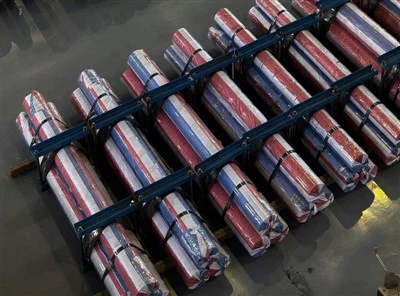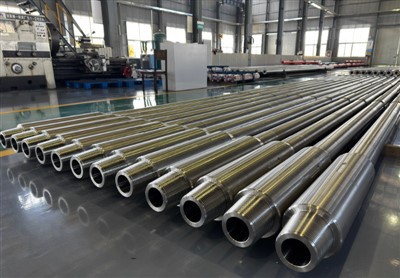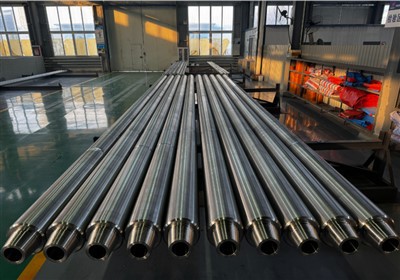

In the realm of oil and gas exploration, the performance of drilling equipment under extreme conditions is of paramount importance. High - temperature environments pose significant challenges to the durability and functionality of drilling tools. As a supplier of Non - Magnetic Flex Drill Collars, I have witnessed firsthand the critical role these collars play in high - temperature drilling operations.
Understanding Non - Magnetic Flex Drill Collars
Non - Magnetic Flex Drill Collars are specialized components in the drill string. They are designed to provide weight to the drill bit, maintain the stability of the drill string, and also offer non - magnetic properties. The non - magnetic feature is crucial as it allows for accurate measurement of the Earth's magnetic field during drilling, which is essential for directional drilling.
The flexibility of these drill collars is another key characteristic. It enables them to adapt to the curvature of the wellbore, especially in horizontal or deviated drilling. This flexibility reduces the stress on the drill string and helps prevent premature wear and failure.
High - Temperature Challenges in Drilling
High - temperature environments in oil and gas wells can be caused by various factors, such as the geothermal gradient of the Earth's crust. As the depth of the well increases, the temperature can rise significantly. Temperatures in some deep wells can exceed 200°C (392°F).
These high temperatures can have several detrimental effects on drilling equipment. Firstly, they can cause thermal expansion of the materials, which may lead to dimensional changes in the drill collars. This can affect the fit and alignment of the drill string components, potentially causing vibrations and increased wear.
Secondly, high temperatures can accelerate the corrosion process. In the presence of corrosive fluids in the wellbore, such as acidic gases or brines, the combination of high temperature and corrosion can weaken the material of the drill collars, reducing their strength and lifespan.
Thirdly, the mechanical properties of the materials used in drill collars can be altered at high temperatures. For example, the hardness and toughness of the steel may decrease, making the drill collars more susceptible to deformation and cracking.
Performance of Non - Magnetic Flex Drill Collars in High - Temperature Environments
Material Selection
To ensure the performance of Non - Magnetic Flex Drill Collars in high - temperature environments, the choice of materials is crucial. We use high - quality non - magnetic alloys that have excellent heat resistance. These alloys are specifically formulated to maintain their mechanical properties at elevated temperatures.
For instance, some of the alloys we use have a high melting point and low thermal expansion coefficient. This means that they can withstand high temperatures without significant dimensional changes. They also have good corrosion resistance, which helps protect the drill collars from the corrosive effects of the wellbore fluids.
Design Considerations
The design of Non - Magnetic Flex Drill Collars also plays a vital role in their performance at high temperatures. Our drill collars are designed with a special geometry that allows for efficient heat dissipation. This helps to prevent the build - up of heat in the drill collars, reducing the risk of thermal damage.
In addition, the flexibility of the drill collars is carefully engineered. The design allows for a certain degree of bending without compromising the structural integrity of the collars. This flexibility helps to accommodate the thermal expansion and contraction that occurs at high temperatures, reducing the stress on the collars.
Testing and Quality Assurance
Before our Non - Magnetic Flex Drill Collars are delivered to the customers, they undergo rigorous testing in high - temperature environments. We use advanced testing equipment to simulate the conditions of deep wells, including high temperatures, pressures, and corrosive fluids.
These tests help us to ensure that the drill collars meet the highest quality standards. We check for any signs of deformation, cracking, or corrosion during the testing process. Only the drill collars that pass these tests are approved for use in high - temperature drilling operations.
Comparison with Other Non - Magnetic Drilling Tools
Non - Magnetic Heavy Weight Drill Pipe
Non - Magnetic Heavy Weight Drill Pipe is another important component in the drill string. While it also provides weight to the drill bit, it has different characteristics compared to Non - Magnetic Flex Drill Collars.
In high - temperature environments, the flexibility of Non - Magnetic Flex Drill Collars gives them an advantage. The Heavy Weight Drill Pipe is more rigid and may be more prone to stress and damage due to thermal expansion. However, the Heavy Weight Drill Pipe may have a larger internal diameter, which can be beneficial for fluid circulation.
Non - Magnetic Pressure - Bearing Drill Pipe
Non - Magnetic Pressure - Bearing Drill Pipe is designed to withstand high pressures in the wellbore. In high - temperature environments, it shares some of the same challenges as Non - Magnetic Flex Drill Collars, such as thermal expansion and corrosion.
The main difference lies in their functions. The Pressure - Bearing Drill Pipe is more focused on pressure resistance, while the Flex Drill Collars are designed for flexibility and weight distribution. Our Non - Magnetic Flex Drill Collars are engineered to provide both flexibility and sufficient strength to withstand the high - temperature and high - pressure conditions.
Non - Magnetic Suspension Sub
The Non - Magnetic Suspension Sub is used to suspend the drill string and provide a connection between different components. In high - temperature environments, it needs to maintain its integrity and connection stability.
Compared to the Non - Magnetic Flex Drill Collars, the Suspension Sub has a different design and function. The Flex Drill Collars are more directly involved in the drilling process, providing weight and flexibility to the drill bit. However, both components need to be made of materials that can withstand high temperatures to ensure the overall performance of the drill string.
Non - Magnetic Drill String Stabilizer
Non - Magnetic Drill String Stabilizers are used to keep the drill string centered in the wellbore and reduce vibrations. In high - temperature environments, they face similar challenges as the Flex Drill Collars, such as thermal expansion and corrosion.
The main difference is that the Drill String Stabilizer is more focused on stability, while the Flex Drill Collars are more about providing weight and adapting to the wellbore curvature. Our Non - Magnetic Flex Drill Collars can work in conjunction with the Drill String Stabilizers to improve the overall performance of the drill string in high - temperature wells.
Conclusion
Non - Magnetic Flex Drill Collars are essential components in high - temperature drilling operations. Through careful material selection, design considerations, and rigorous testing, we ensure that our drill collars can perform effectively in these challenging environments.


If you are involved in oil and gas exploration and are looking for high - quality Non - Magnetic Flex Drill Collars for your high - temperature drilling projects, we invite you to contact us for a detailed discussion. Our team of experts is ready to provide you with the best solutions and technical support.
References
- API RP 7G, “Recommended Practice for Drill Stem Design and Operating Limits”
- SPE papers on high - temperature drilling equipment performance