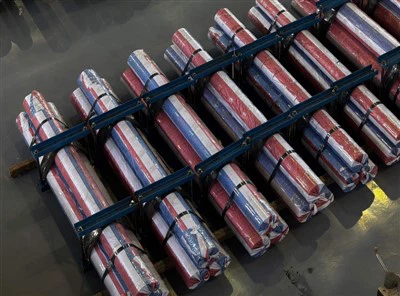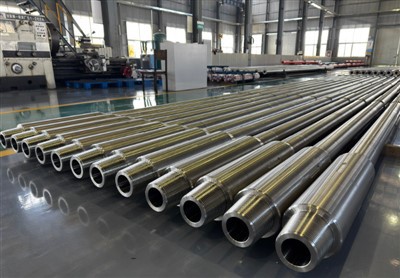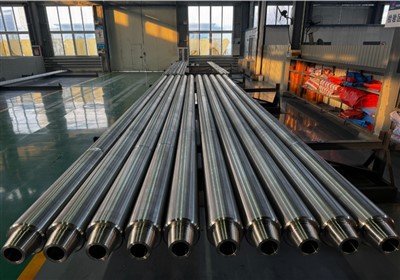

An oilfield stabilizer is a crucial tool in the oil and gas industry, playing a vital role in ensuring the stability and efficiency of drilling operations. As a leading supplier of oilfield stabilizers, I have witnessed firsthand the importance of understanding the key components that make up these essential tools. In this blog post, I will delve into the main elements of an oilfield stabilizer, highlighting their functions and significance in the drilling process.
1. Body Material
The body of an oilfield stabilizer is typically made from high - strength steel or non - magnetic materials. High - strength steel is commonly used for its durability and ability to withstand the high pressures and forces encountered during drilling. Non - magnetic materials, on the other hand, are essential in situations where magnetic interference needs to be avoided. For example, in directional drilling, non - magnetic stabilizers are used to ensure accurate measurement of the wellbore's orientation.
We offer a range of non - magnetic stabilizers, including the Non - Magnetic Drill String Stabilizer, which is designed to provide excellent stability while minimizing magnetic interference. These non - magnetic stabilizers are made from special alloys that have low magnetic permeability, allowing for precise downhole measurements.
2. Blade Design
The blades of an oilfield stabilizer are one of its most critical components. They are responsible for maintaining the position of the drill string in the wellbore and preventing it from deviating from the desired path. The design of the blades can vary depending on the specific drilling requirements.
There are several types of blade designs, such as straight blades, spiral blades, and helical blades. Straight blades are simple and provide a basic level of stabilization. Spiral blades, on the other hand, offer better cutting and cleaning capabilities, as they can help to remove cuttings from the wellbore more effectively. Helical blades combine the advantages of both straight and spiral blades, providing enhanced stability and efficient cuttings removal.
Our Drill String Stabilizer features a carefully engineered blade design that is optimized for different drilling conditions. The blades are made from high - wear - resistant materials to ensure long - term performance and reliability.
3. Bearing Surfaces
Bearing surfaces are another important part of an oilfield stabilizer. They are in contact with the wellbore wall and help to distribute the weight of the drill string evenly. This reduces the wear and tear on the stabilizer and the drill string, as well as minimizing the risk of differential sticking.
The bearing surfaces are usually coated with a hard - facing material to increase their resistance to abrasion. This coating can be made from materials such as tungsten carbide or other hard alloys. The thickness and quality of the hard - facing coating can significantly affect the performance and lifespan of the stabilizer.
4. Connection Threads
The connection threads of an oilfield stabilizer are used to connect it to the drill string. They need to be strong and reliable to ensure a secure connection. There are different types of connection threads, such as API (American Petroleum Institute) threads and proprietary threads.
API threads are standardized and widely used in the oil and gas industry. They are designed to provide a tight and leak - free connection. Proprietary threads, on the other hand, are developed by individual manufacturers and may offer specific advantages, such as higher torque capacity or better resistance to fatigue.
We ensure that all our stabilizers are equipped with high - quality connection threads that meet or exceed industry standards. This ensures that our stabilizers can be easily integrated into existing drill strings and provide a reliable connection during drilling operations.
5. Internal Passage
The internal passage of an oilfield stabilizer allows the drilling fluid to flow through the tool. The drilling fluid, also known as mud, serves several important functions, including cooling the drill bit, carrying cuttings to the surface, and maintaining wellbore pressure.
The design of the internal passage is crucial to ensure efficient fluid flow. It should have a smooth and unobstructed surface to minimize pressure drop and prevent the accumulation of debris. The diameter of the internal passage is also carefully selected to match the flow rate requirements of the drilling operation.
6. Optional Accessories
In addition to the basic components, oilfield stabilizers can be equipped with optional accessories to enhance their performance. For example, some stabilizers may have wear pads or inserts to further protect the bearing surfaces. These wear pads can be made from high - hardness materials and can be replaced when they are worn out.
Another optional accessory is the centralizer. Centralizers are used to keep the drill string centered in the wellbore, especially in deviated or horizontal wells. They help to reduce the friction between the drill string and the wellbore wall, improving the overall efficiency of the drilling process.
We offer a variety of optional accessories for our oilfield stabilizers, allowing customers to customize the tools according to their specific needs. For instance, our Non - Magnetic Suspension Sub can be used in combination with our stabilizers to provide additional support and stability.
7. Quality Control and Testing
Ensuring the quality of oilfield stabilizers is of utmost importance. We implement a strict quality control system throughout the manufacturing process. This includes material inspection, dimensional checks, and non - destructive testing.


Material inspection is carried out to verify the quality and properties of the raw materials used in the stabilizer. Dimensional checks ensure that the stabilizer meets the specified design requirements. Non - destructive testing methods, such as ultrasonic testing and magnetic particle testing, are used to detect any internal defects or cracks in the stabilizer.
In addition to in - house testing, our stabilizers are also subjected to field testing in real - world drilling conditions. This helps us to validate the performance and reliability of our products and make any necessary improvements.
Conclusion
In conclusion, an oilfield stabilizer is a complex tool composed of several key components. Each component plays a specific role in ensuring the stability and efficiency of drilling operations. As a supplier, we are committed to providing high - quality oilfield stabilizers that meet the diverse needs of our customers.
If you are in the market for oilfield stabilizers or have any questions about our products, we invite you to contact us for a detailed discussion. Our team of experts is ready to assist you in selecting the right stabilizer for your drilling project.
References
- API Specification 7 - 1, Rotary Drill Stem Elements
- Spears & Associates, Inc., Drilling Equipment Market Research Reports
- Industry - specific technical papers on oilfield stabilizer design and performance.